The Land Rover has been still for forty minutes. Your guide, Simon, hasn’t said a word. Neither have you.
Across the golden grass, a cheetah mother is teaching her three cubs how to stalk. The cubs keep breaking formation, distracted by a butterfly, then a dung beetle. She waits, patient as the savanna itself. Then, without warning, she glances directly at your vehicle and holds your gaze for a long, unhurried moment.
You wouldn’t have seen this on a rushed itinerary. You wouldn’t have had the time.
This is the heart of the slow safari philosophy in East Africa, the radical, deeply rewarding idea that less movement means more meaning. And for discerning travelers who want to feel Africa rather than merely photograph it, it’s the smartest decision you’ll ever make.
Why a Slow Safari Is Worth It
Most first-time safari itineraries follow a familiar pattern: three days in the Mara, two nights in Amboseli, a quick flight to Zanzibar. It looks impressive on paper. But veterans of East Africa all say the same thing, the real magic only begins when you stop moving.
The rushed itinerary problem:
- Constant packing and unpacking disrupts rest and rhythm
- New camps mean new guides who don’t yet know what you care about
- Animal sightings feel transactional — arrive, click, depart
- You spend a disproportionate amount of time in transit
A slow safari in East Africa solves all of this. By committing to fewer destinations and longer stays, you enter a different relationship with the landscape. Game drives stop being about ticking species off a list and start being about understanding behavior. You begin to recognize individual animals. You watch a pride’s dynamics unfold across several days. You stop rushing, and the wilderness rewards your patience.
“The guests who stay four or five nights in one camp always leave differently. They don’t just have photographs — they have stories.” — Simon, senior guide, Maasai Mara
There’s also a practical advantage: private guides at quality lodges tailor every day to your interests once they’ve had a day or two to get to know you. That’s a luxury no amount of money can buy on a two-night hop.
What You Can Expect from a Slow Safari
Deeper Wildlife Encounters
Slow safaris produce the kind of sightings that end up in wildlife documentaries. On consecutive days in the same territory, your guide builds a mental map of where certain prides rest at midday, where the leopard has stashed her kill, and where the elephants water at dusk. Patience compounds. Rare behaviour, predator hunts, newborn calves, and territorial standoffs become expected rather than accidental.
Personalized Guiding
Staying longer means your guide stops being a stranger. By day two, they know whether you’re a birder or a big-cat obsessive. By day three, they’re waking you early because they spotted hyena cubs near the den. This is the version of Safari you came to Africa for.
Genuine Rest and Rhythm
The slow safari is also slow in the best lifestyle sense. You wake with the sunrise not because you’re racing to another camp, but because you want to. Afternoons are yours: a siesta on a shaded deck, a sundowner on the kopje, a guided bush walk that nobody’s rushing through. East Africa is beautiful in stillness. The slow safari lets you find that.
Authentic Connection to Place
Extended stays allow you to go beyond the vehicle. You learn the names of the kitchen staff. You sit with a Maasai elder at the boma. You understand, even slightly, the complex web of conservation, community, and wildlife that makes these landscapes survive. That depth simply cannot be compressed into 48 hours.
Best Destinations for a Slow Safari in East Africa
Maasai Mara, Kenya
Why it rewards longer stays: The Mara’s dense predator population and year-round resident wildlife make it the continent’s most reliably dramatic safari destination. Longer stays allow you to follow specific prides or cheetah families across multiple sightings.
Recommended stay: 4–6 nights
Best for: Wildlife photographers, big cat enthusiasts, honeymooners
Peak season tip: The Great Migration (July–October) brings extraordinary river crossings, but limited availability means these camps book 12–18 months ahead. Secure your preferred dates early.
Serengeti, Tanzania
Why it rewards longer stays: The Serengeti’s sheer scale — almost 15,000 square km — means no two mornings are the same. Stay in the northern Serengeti for migration drama, or the central plains for year-round lion action.
Recommended stay: 4–7 nights Best for: Migration seekers, first-time safari travelers wanting the iconic experience, repeat visitors going deeper
Amboseli, Kenya
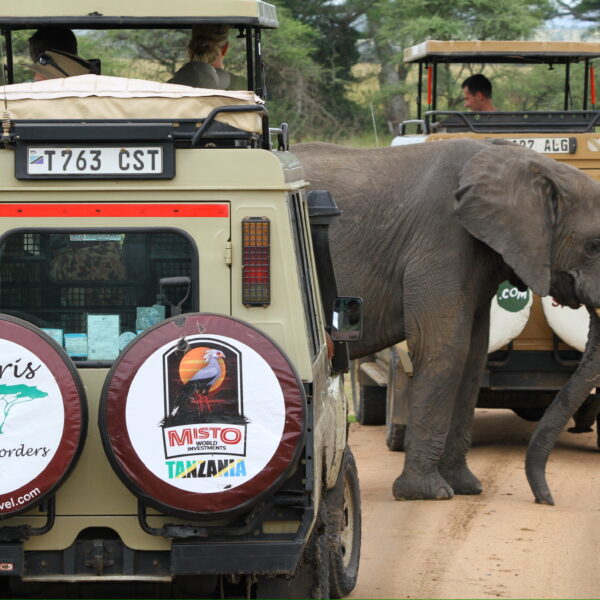
Why it rewards longer stays: Amboseli’s elephants are the most studied in Africa and completely habituated to vehicles. Extended stays mean you can follow specific family groups across multiple days, building an emotional connection that is genuinely rare.
Recommended stay: 3–4 nights Best for: Families, elephant lovers, landscape photographers (Kilimanjaro light is different every morning)
Laikipia Plateau, Kenya
Why it rewards longer stays: Kenya’s most underrated safari destination is also its most immersive. Laikipia offers walking safaris, night game drives, horseback safaris, and cattle drives — none of which are possible in national parks. A longer stay lets you experience all of it.
Recommended stay: 4–5 nights Best for: Adventurous couples, repeat visitors bored of vehicle-only safaris, travelers interested in community conservation
Ngorongoro Highlands, Tanzania
Why it rewards longer stays: The Crater is the world’s largest intact volcanic caldera, a self-contained ecosystem that holds the Big Five in a single day’s drive. Paired with the adjacent Ngorongoro Highlands for cultural immersion, this is slow safari at its most layered.
Recommended stay: 3–4 nights Best for: Luxury travelers, those combining with Serengeti, culture and nature seekers
Best Safari Lodges & Camps for Longer Stays
Not all lodges are built for extended stays. The best slow safari properties share a few key qualities: knowledgeable resident guides who know their territory intimately, diverse activities beyond the standard game drive, exceptional food and a genuine sense of place, and privacy — ideally a low camp-to-bush ratio.
Luxury options to consider in the Mara ecosystem include camps like Angama Mara, Kichwa Tembo, Enkakenya, Mara Bushtops, and Mahali Mzuri — all of which emphasize guiding quality and curated experiences.
Boutique and mid-range options in Laikipia such as Ol Pejeta Bush Camp and Lewa Wilderness offer the walking safari and horseback dimension that many luxury travelers increasingly seek.
Mobile and fly-camp options in the Serengeti allow you to move with the migration while still committing to each location for 3–4 nights at a time — a slow safari adapted to a seasonal landscape.
How to Choose the Right Slow Safari Experience
Lodge vs mobile camp: Fixed lodges offer more amenities and consistently excellent guiding from guides who have worked the same territory for years. Mobile camps offer the romance of camping under canvas and the ability to follow wildlife seasonally — but with less infrastructure.
Private vs shared game drives: For a slow safari, private game drives are strongly recommended. They allow you to stay at a sighting indefinitely — critical for behaviour-based wildlife watching.
One destination vs two: For a first slow safari of 7–10 days, one or two destinations are ideal. Kenya and Tanzania are commonly combined; a classic pairing would be Maasai Mara (4 nights) + Amboseli (3 nights) with a day in Nairobi.
Seasonal considerations:
- Great Migration (July–October): Best in Maasai Mara and northern Serengeti
- Dry season (June–October, Jan–Feb): Vegetation thins; wildlife concentrates at water sources — excellent for extended big cat observation
- Shoulder season (March–June, November): Lower prices, fewer vehicles, lush landscapes — ideal for slow safari photography
How to Plan & Book Your Slow Safari
Step 1: Define your why. Big cats? Elephants? Photography? Romance? The purpose of your safari determines the destination and the lodge.
Step 2: Set your dates — and be flexible. The best lodges in the Mara fill up 12–18 months out for peak season. For greater flexibility, consider the shoulder season (see below).
Step 3: Choose your operator. Work with a specialist safari operator who focuses on East Africa — not a generalist OTA. Ask specifically about the guiding team at each property you’re considering. The guide makes or breaks a slow safari.
Step 4: Depth plan, not breadth. Resist the temptation to add “just one more destination.” Every additional transfer compresses your time at each location.
Step 5: Budget holistically. Include all domestic transfers, park fees, visas, and tips. A well-planned slow safari has fewer surprises.
Key mistakes to avoid:
- Choosing a lodge based on social media photos rather than guiding reputation
- Over-itinerarying — less is genuinely more
- Booking too late for peak season dates
- Skipping a bush walk or night drive because you’re “tired” — these are often the most memorable moments
Who a Slow Safari Is Perfect For
Honeymooners and couples: The unhurried rhythm of a slow safari — long breakfasts, private game drives, sundowners at dusk — is inherently romantic. Slow safari is the finest honeymoon framework East Africa offers.
Wildlife photographers: You simply cannot capture behavior without time. Slow safaris give you the consecutive hours at a sighting that produce award-worthy images.
Repeat safari visitors: If you’ve “done the Mara,” a slow safari reveals a completely different experience — one built on familiarity rather than novelty.
Luxury travelers: Those accustomed to quality hospitality will appreciate how much richer the lodge experience becomes over 4–5 nights versus the industry-standard 2.
Nature and conservation enthusiasts: Extended stays allow community visits, conservation briefings, and guided bush walks that 2-night guests never experience.
Families with children (older than 7): Children respond extraordinarily well to the rhythm of slow safari — learning animal names, developing patience, and experiencing genuine wonder that no screen can replicate.
Frequently Asked Questions
Is it better to stay in one safari lodge for the whole trip? For many travelers, yes — especially on trips of 7 nights or fewer. One lodge means one incredible guide who knows your interests, zero packing stress, and consecutive sightings that build on each other. The trade-off is less geographic variety, which for most travelers is no trade-off at all.
How many days should I spend on safari in East Africa? A meaningful slow safari requires a minimum of 4 nights in one location. For a full East Africa safari experience combining Kenya and Tanzania, 10–14 days is ideal. Anything under 3 nights per camp will feel hurried.
Is a slow safari more expensive than a traditional safari? It can appear more expensive upfront — simply because you’re spending more nights at quality lodges. But when you factor in the cost of domestic flights between multiple camps, the value equation shifts. Many lodges also offer 5th-night complimentary stays. Per meaningful experience, slow safaris typically cost less.
Can I combine Kenya and Tanzania in a slow safari? Absolutely. A classic combination is 4 nights in the Maasai Mara (Kenya) followed by 4–5 nights in the Serengeti or Ngorongoro (Tanzania). The cross-border logistics are straightforward with an experienced operator. Note: Kenyan-registered vehicles cannot cross into Tanzania, so a transfer at the border is required.
When is the best time for a slow safari in East Africa? The classic answer is the dry season: June–October in Kenya and Tanzania. But the shoulder season (March–May, November) offers dramatically lower rates, fewer vehicles in the bush, and lush green landscapes that are extraordinarily photogenic. For the Great Migration river crossings, July–October in the Maasai Mara is the specific window.
What’s the difference between a slow safari and a regular safari itinerary? A traditional safari itinerary prioritizes variety — multiple destinations, maximum species, constant movement. A slow safari prioritizes depth — fewer destinations, longer stays, richer individual encounters. The goal shifts from “how much can I see?” to “how well can I understand what I’m seeing?”
The Africa That Stays With You
There is a version of East Africa that lives on a highlight reel — the dramatic crossing, the lion kill, the elephant at sunrise. It is real. It is extraordinary.
But there is another version, quieter and perhaps more profound: the one you discover when you stop moving. When you’ve spent enough mornings in the same valley that the landscape begins to feel familiar. When a cheetah walks past your vehicle without acknowledging you, because you are, by now, simply part of the furniture of her world.
That is the slow safari. That is the Africa that stays with you long after the tan fades and the suitcase is unpacked.
You can rush East Africa. Millions of people do.
Or you can know it.
Ready to plan a slow safari that changes how you see the world? Contact us today — and let’s build an itinerary worth taking your time over.